
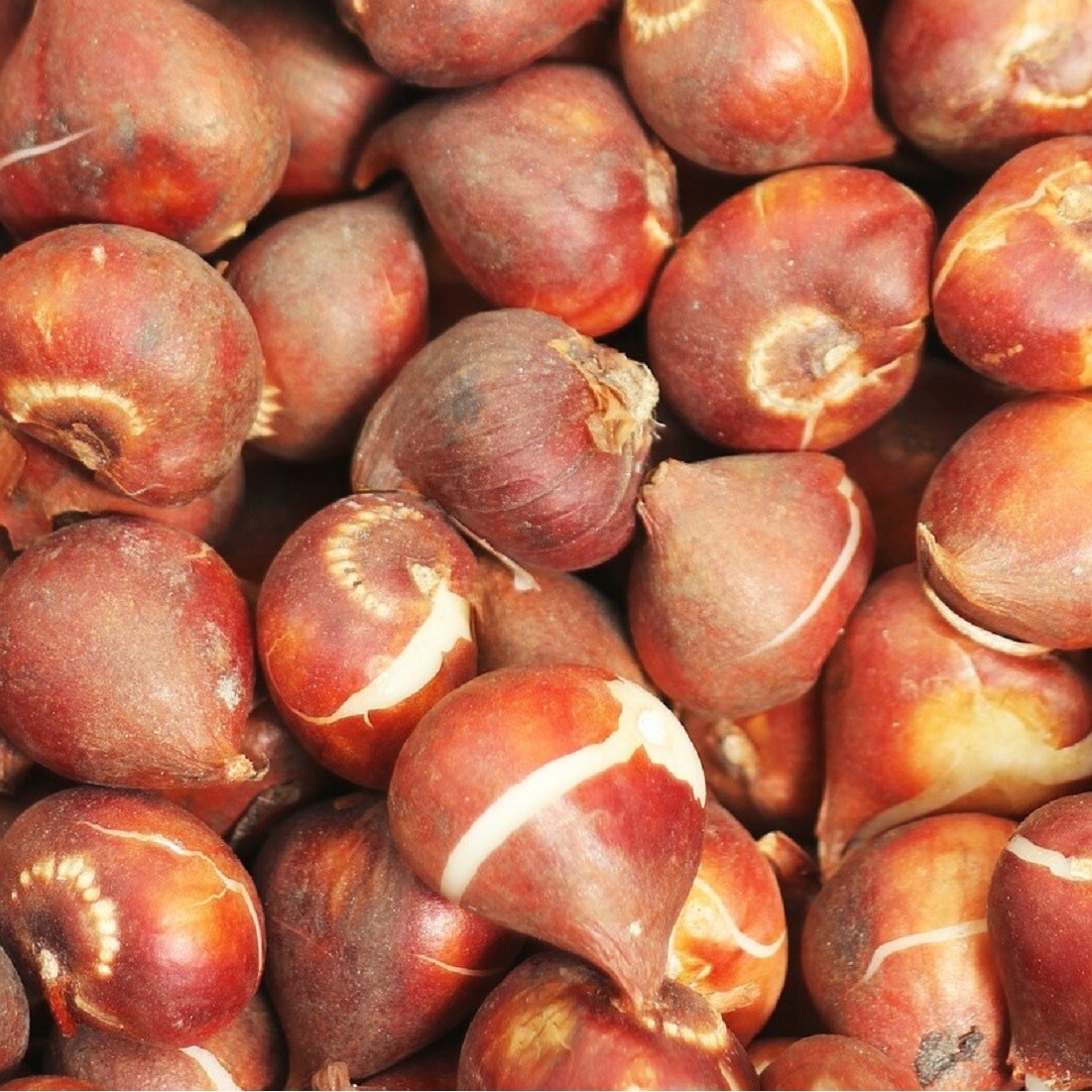
Basic Rules for Planting Bulbs at the Right Depth
The general rule is: plant a bulb two to three times as deep as its height. By "planting depth," we mean the distance between the top of the bulb and the soil surface. This rule applies to most bulbs, but there are a few exceptions.
Practical tips for optimal results:
- Layered planting for pots: For long-lasting, layered blooms in pots or containers, plant bulbs in different layers, each at their ideal depth.
- Adjust depth to your soil: In light, sandy soil, you can plant bulbs a bit deeper. In heavy, clay soil, plant them slightly shallower to prevent rot.
- Protection against cold and wind: For extra protection against severe frost, plant frost-sensitive bulbs a little deeper. Tall bulbs like ornamental onions or crown imperials get more support and are less likely to fall over when planted deeper.
Detailed Planting Guide per Bulb
Snowdrops (Galanthus nivalis)
- Characteristics: The first messengers of spring, sometimes breaking through the snow in January
- Ideal planting depth: 5–8 cm
- Spacing: Plant close together for a natural effect (at least 50 bulbs per m²)
- Extra tips: Plant in September–October. They naturalize easily and form beautiful clumps over the years. Divide clumps every 3–5 years to propagate
Crocuses
- Characteristics: Cheerful, cup-shaped flowers from February, perfect for lawns, rock gardens, or pots
- Ideal planting depth: About 10 cm
- Spacing: Plant in groups of 5, 10, or more for a colorful carpet
- Extra tips: Plant in September–November. Prefer sunny spots. For wet soil, add a layer of grit or hydro pellets at the bottom of the hole for better drainage
Chionodoxa (Glory-of-the-Snow)
- Characteristics: Star-shaped blue, white, or pink flowers, perfect for naturalizing in grass, borders, or rock gardens
- Ideal planting depth: About 5 cm
- Spacing: 10–12 cm between bulbs
- Extra tips: Plant in September–November. Prefer partial shade or full sun with well-draining soil. Not suitable for hot, dry areas
Iris
Different species have different requirements:
- Bearded Iris (Iris germanica): Plant the rhizome very shallow; it should sit half above the ground. Prefers dry, well-draining soil in full sun
- Japanese Iris (Iris ensata): Loves moist soil! Plant the root clump 1–2 cm deep or the fibrous rhizome 3–5 cm deep near ponds or wet borders
- Siberian Iris (Iris sibirica): Similar to Japanese iris; moist soil and 3–5 cm planting depth for rhizomes
Daffodils (Narcissus)
- Characteristics: Classic spring bulbs, from small botanical types to large trumpet varieties; hardy and shade-tolerant
- Ideal planting depth: About 10 cm
- Spacing: Keep 10 cm between bulbs
- Extra tips: Plant September–December. Plant in groups of 5–10 for a natural effect. Naturalize in lawns and tolerate slightly moist soil
Grape Hyacinths (Muscari), Anemone blanda, & Scilla
- Grape Hyacinths (Muscari): Plant 8 cm deep, 6–8 cm apart. Naturalize well; love sun or partial shade
- Anemone blanda: Plant 5–6 cm deep in humus-rich, well-draining soil. Forms beautiful blue, pink, or white carpets under trees or shrubs
- Scilla: Plant 8–10 cm deep, tip facing up. Prefer (partial) shade, naturalizes beautifully
Crown Imperials (Fritillaria imperialis)
- Characteristics: Majestic bulbs with a crown of bells above a rosette of leaves. Fragrance deters moles and voles
- Ideal planting depth: 10–20 cm (≈ 3× bulb height)
- Spacing: Leave at least 30 cm between bulbs
- Extra tips: Plant immediately after purchase. Needs full sun and well-draining soil. Plant slightly slanted to prevent water accumulation and rot
Tulips
- Characteristics: Iconic spring symbol with an incredible variety of colors and shapes
- Ideal planting depth: 12–15 cm (botanical tulips 10–12 cm)
- Spacing: Keep 10 cm between bulbs
- Extra tips: Plant October–December in sunny, well-draining soil. In heavy soil, add grit. Mix in some compost for richer blooms
Hyacinths
- Characteristics: Famous for intense fragrance and sturdy flower spikes. Suitable for borders, pots, or indoor forcing
- Ideal planting depth: About 8 cm
- Spacing: 10–15 cm
- Extra tips: Plant October–November in sun or light shade. Ensure proper drainage. Wear gloves – sap can irritate skin
Ornamental Onions (Allium)
- Characteristics: Spectacular flower spheres on tall stems. Bloom late spring to early summer. Excellent dried flowers
- Ideal planting depth: 10–15 cm (for large varieties like 'Globemaster' or 'Purple Sensation')
- Spacing: 15–20 cm
- Extra tips: Plant September–October in full sun with well-draining soil. Avoid wet feet in winter. Plant early for proper root establishment
Summary and Final Tips
- Planting time is crucial: Most spring bulbs are planted between September and December, before the first severe frost. Earlier planting helps root development
- Drainage is king: Wet soil causes bulb rot. Improve heavy soil with grit, sand, or compost
- Naturalizing: Many bulbs (crocus, snowdrops, grape hyacinths, Scilla, daffodils) return year after year. Let leaves die back to store energy for next season
- Protection: Keep an eye on newly planted bulbs; mice and squirrels love them. Chicken wire can help protect your plantings
With this guide, you’re fully prepared to transform your garden, balcony, or terrace into a colorful spring celebration. Happy planting, and enjoy your own blooming flowers!